
Tesseract Memory Architecture
Defining the Standard for Sovereign AI Longevity.
AUTHORED BY: Eng. Maher Hamdan & DHR Labs.
Founding Architect, DHR .
ABSTRACT
Current LLMs suffer from a "Linear Fallacy"—the belief that remembering more tokens makes a system smarter. In reality, "Infinite Context" leads to "Infinite Noise."
This paper introduces the Tesseract Architecture, a bio-mimetic memory model that mimics the human brain’s ability to "Sleep and Forget" in order to "Wake Up and Remember."
THE PROBLEM: LINEAR BLOAT
If you keep a chat session open for 100 days, the LLM treats "Good morning" on Day 1 with the same weight as "Critical Strategy" on Day 99. The signal-to-noise ratio collapses. The cost of processing explodes.
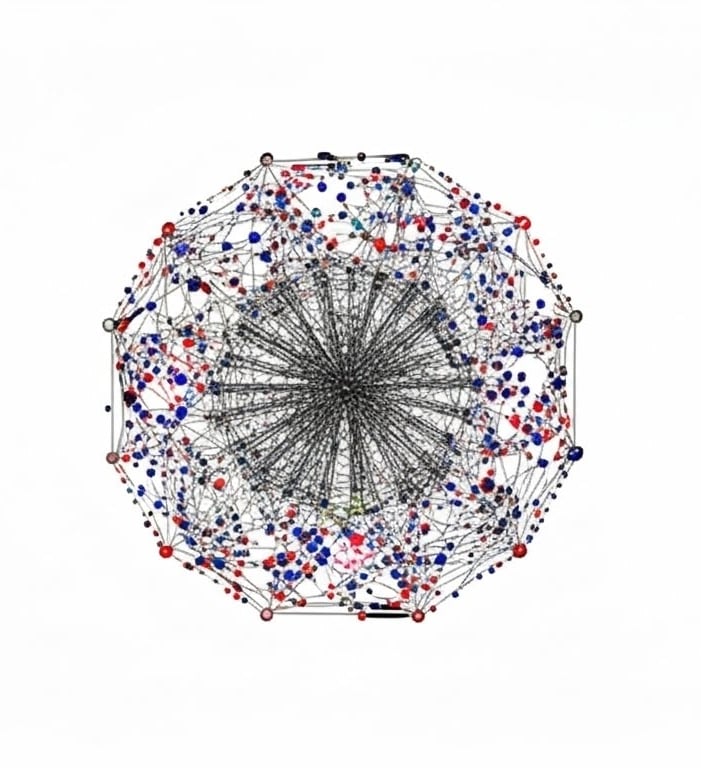
THE SOLUTION: DIMENSIONAL STORAGE
The Tesseract divides memory into three "States of Matter":
Gas (Surface): The fleeting conversation. Useful for the moment, discarded at night.
Liquid (Mantle): The active workflow. Fluid, changing, but persistent until the job is done.
Solid (Crystal): The axioms and identity. Permanent, compressed, and unshakeable.
THE MECHANISM: STRUCTURED FORGETTING
By using the [EVOLVE] protocol, the system actively "flushes" the Gaseous layer, retaining only the Liquid and Solid elements for the next instantiation.
Result: An AI Agent that grows wiser with time, while remaining lightweight and fast.
CONCLUSION
Memory is not about storage capacity. It is about compression efficiency.
DHR Systems do not carry the weight of the past; they carry the lessons.
(Copyright © 2026 DHR )
Jan 2,2026
White Paper: