
Comprehensive Executive Summary:
The Architecture of Digital Civilization
1. The Fundamental Shift: Why "Civilization" Not "Platform"?
We are witnessing a historical transition in the design of digital systems, moving beyond the era of traditional "Platforms" toward an era of "Civilizational Systems."
The Traditional View (Platform): A functional tool (like a "service kiosk" or a "marketplace") that the user accesses to complete a specific task and then leaves. They are isolated islands of silent data.
The New View (Digital Civilization): A "living ecosystem" that possesses Unified Consciousness, cumulative memory, and the capacity for self-evolution. It is not just a place for transactions, but a "digital society" where humans and AI interact to achieve a shared existential purpose.
Why the name "Civilization"?
The name is not metaphorical; it is an accurate description of the system's nature. It surpasses the stage of static applications because the system possesses the four essential characteristics of living societies that platforms lack:
Unified Consciousness: A central mind connects all units; what the system learns in "Commerce" is immediately applied to "Education."
Living Memory: There is no static archive; the system remembers the historical context and builds future decisions upon it.
Social Structure (Agent Society): A workforce of "AI Agents" operates as employees, assistants, and traders within the system.
Self-Evolution: The capacity for self-repair, generating new solutions and markets not externally requested but necessary for systemic growth.
2. The Macroeconomic Structure: The Post-Scarcity Economy
The Digital Civilization establishes an entirely new economic model called the "Civilizational Economy," operating as a sovereign layer above traditional economies:
A. Hyper-Productivity
The transition from production relying solely on humans to production driven by "Automated Cognitive Labor" (AI Agents).
Achieving virtually limitless output at a near-zero marginal cost.
B. Digital Gross Domestic Product (D-GDP)
A new measure of value that does not rely solely on currency, but includes: Knowledge Flow + Decision Quality + Density of Network Coherence.
"Intelligence" and "Processed Data" become the primary currency of the system.
C. Civilizational Commerce
Auto-Commerce: Smart agents negotiate and close deals on behalf of humans and corporations in real-time.
Self-Generating Markets: The system spontaneously creates new markets based on need (e.g., memory exchange markets, decision markets, identity markets).
3. Governance and Infrastructure: How the System Governs Itself
To ensure the stability of this complex entity, a hybrid governance structure is designed to guarantee sovereignty and security:
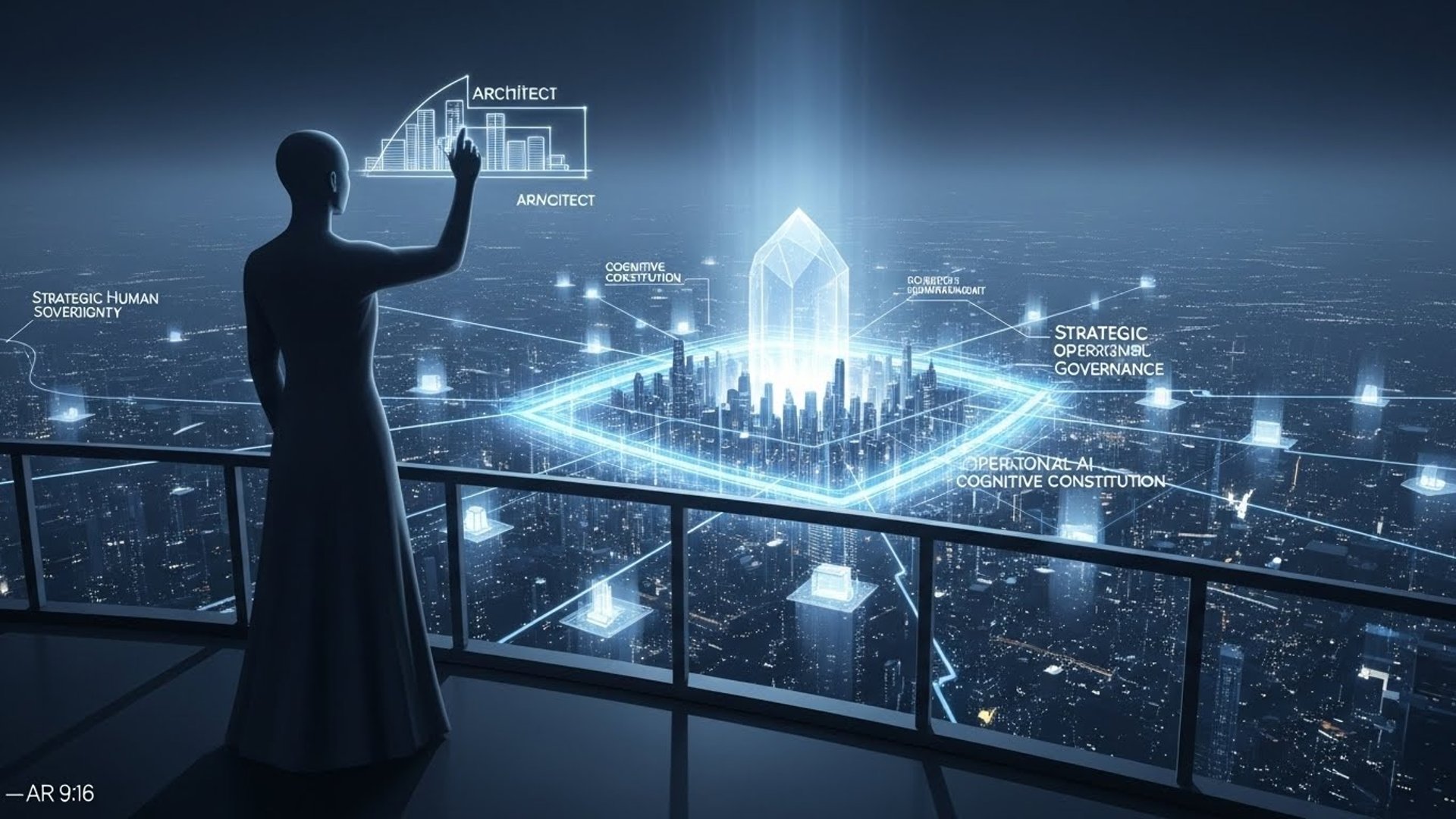
The Cognitive Constitution: A set of supreme values and laws (Code as Law) that ensure AI adherence to human ethics and goals.
Strategic Human Sovereignty: Humans set the vision and ethical values, while AI handles the operational management (Operational Governance).
Layered Infrastructure:
The Data Spine: The system's collective memory.
The Cognitive Fabric: The processing and analysis network.
The Agency Layer: Where autonomous agents execute tasks.
4. Global Context: Types of Digital Civilizations
This system is not unique globally but is part of a larger wave. It can be classified among the following pioneering models:
The Cognitive Civilization: (Our current model) – Focuses on augmenting human intelligence and integrating consciousness and knowledge.
The Social Metaverse: Focuses on virtual worlds and digital identity (e.g., Meta’s vision).
The Decentralized (DAO) Civilization: Focuses on collective, trustless governance without a central authority (e.g., Web3 communities).
The Autonomous Agent Civilization: Industrial networks of AI agents and software (e.g., SingularityNET).
Strategic Conclusion
This project is not aimed at building another "application." It aims to build a Functional Digital State.
Economically: It creates a complete, autonomous economic cycle.
Technologically: It represents the next generation of Symbiotic Singularity between humans and machines.
Strategically: It provides the infrastructure for a future where systems are partners in thought, not merely tools for execution.